


Murder of Somali draws ire of foreign African nationals over rising xenophobic violence.
Johannesburg, South Africa - In a country with a history of violence like South Africa, there are few scenes of brutality that can still shock the nation.
The video that emerged on YouTube last weekend of a Somali man lying flat in a Port Elizabeth street has shocked many South Africans out of a general complacence over the rising incidence of violence against foreigners in the country.
The man, who was stripped naked, his genitals pelted with rocks, stones smashed over his head all the while receiving kicks to the face, became the latest victim of xenophobic violence in the country.
The 25-year-old man, Abdi Nasir Mahmoud Good, died of his injuries. Good is just one of the victims of the xenophobic violence that flared through northern Port Elizabeth and up to four other towns and cities across the country last week.
Five other Somalis were injured in the violence and almost every Somali-owned business in Port Elizabeth’s Booysen Park was burned or looted.
Good's family said he had been trying to salvage his goods in the small store he owned in Booysens Park when he met the ire of a mob.
National problem
Before the wave of violence hit Port Elizabeth, the sprawling township of Diepsloot in Johannesburg was a scene of chaos after a Somali shopkeeper killed two Zimbabweans he suspected to be thieves on the evening of Sunday, May 26.
Angered by the shootings, Diepsloot residents turned their attention on the Somalis, Pakistanis and other foreign nationals doing business in the township. Nineteen foreign-owned stores were attacked in a frenzy of xenophobic violence and looting over the next two days.
Though calm has been restored to Diepsloot, the Somali store at the centre of the issue remains closed. A co-owner of the store, Amina Hassan Abdi, a Somali woman who fled the conflict in the Horn of Africa in 2007, said the violence essentially destroyed her livelihood.
“You need money to open the shop again and I now have none,” she said. Abdi also previously worked as a street vendor in Diepsloot. She said the discrimination she faced every day forced her to give up her stall.
"I don’t look like a South African and I wear this,” she said, pointing to her hijab.
“Every day I was getting too much trouble, people were swearing me, they were shouting me, stealing my stuff ... they don't like us,” she said.
Just days before the looting of Somali-owned stores in Diepsloot, some 60 km south of Johannesburg, in the township of Sebokeng, foreign-owned stores were also systematically looted after a protest against poor governance in the area catalysed into a campaign to root out foreigners and foreign-owned businesses from the township.
By the time the police stepped in, all foreign-owned stores had been looted, the belongings of foreign nationals were burned and foreigners were driven out of the township.

Despite the targeting, the South African government has been quick to caution against labelling this surge in violence as xenophobia because "preliminary evidence indicates that these acts may be driven primarily by criminality".
Al Jazeera requested comment repeatedly from the office of South Africa's president of the department of home affairs and the South African police services, but recieved no response.
Labelling the violence as just crime creates a false debate, said Biniam Misgun, lecturer in the School of Sociology at the University of KwaZulu-Natal, in Durban.
"When you see a group intentionally attacked and their shops looted because they are foreign, then you cannot just say it's criminality driving this," Misgun told Al Jazeera.
Misgun's assertions that these are hate crimes are corroborated by statistics. In 2011, around 120 foreign nationals were killed, of whom five were burnt alive. In 2012, 140 foreigners were killed and 250 others injured in violent attacks across the country, reported the African Centre for Migration & Society (ACMS) in Johannesburg.
In 2013, the Centre estimates that at least three attacks on foreigners take place weekly.
Complex issue

Understanding the context of xenophobic sentiment in the grand intersection of race and class in a South Africa mired by a complex social and economic history is difficult.
As the largest economy on the continent, South Africa has attracted foreign Africans from as far afield as Nigeria, Ethiopia, the DR Congo and as close as neighbouring Botswana. They come as political refugees or economic migrants, with one goal: a better life. Following the end of apartheid in 1994, thousands of Chinese and South Asian foreign nationals have been living and conducting business across the country.
Instead of South Africans thriving on its much-vaunted multicultural identity, foreigners have been painted in the popular imagination as criminals, job snatchers, and parasites arriving in throngs to eat at an economy battling to feed its own people.
New research released last month from the Southern African Migration Programme (SAMP) found that more than 50 percent of South Africans believed foreigners constituted a majority of the country's population. In reality, foreign nationals amount to less than five percent, or 2.2 million people out of a population of around 50 million.
The SAMP study, investigating the incidence of xenophobia in South Africa after the horrific attacks of 2008 which killed more than 60 people, also debunks the popular notion that xenophobia was a disease of the poor.
That these attacks are taking place in already rough neighborhoods is worth remembering, Loren Landau, director of the African Centre of Migration and Society (ACMS) in Johannesburg, said.
The study found that xenophobia is firmly embedded across all economic and social strata of South African society but with incidents of violence are more likely in impoverished areas where a riot can sometimes be the only way to the draw government attention.
Government attitude
Researchers suggest that the root of the problem lies with the government’s attitude to foreigners, especially foreign African nationals.
Foreign nationals entering the country and trying to integrate into society narrate tales of daily strife with authorities. They report harassment at police stations, neglect at hospitals and abuse at immigration offices.
Abuse is widespread, migrants said. Last Monday, in the midst of this upsurge in violence against foreign nationals, security staff at an office of the Department of Home Affairs turned a fire hose on hundreds of refugees queuing to renew their documents.
The cold sting meted out to the hundreds of refugees, many of whom are forced to queue for weeks in order to renew their temporary asylum seeker’s documents, is just part of a daily digest of humiliation endured by foreign nationals.
Abdi, the Somali businesswoman in Diepsloot, said that her son’s asylum seeker certificate was stolen when her store was looted. Police, however, refused to allow her to open a case of theft or compile an affidavit attesting to the theft of the documents in order for the Department of Home Affairs to issue her son new set of documents.
“When I went to Diepsloot police on Friday they said it is too late [to open] the case,” she said. “Then I said, okay, I want to make affidavit but they said, ‘No, go to Home Affairs’". Home Affairs, she said will want to see proof from the South African Police Services that the documents were indeed stolen.
This is how the trouble starts, researchers said. "The way the state treats foreign nationals essentially represents the way ordinary people treat foreign nationals," Misgun adds.
Despite attracting the biggest number of asylum seekers in the world, The Southern African Migration Project (SAMP) found that South Africans receive foreigners with a jaundiced eye.
It is a tenuous contradiction, activists said. "On one hand, South Africa wants to promote solidarity and unity on the African continent and yet there is move towards a more restrictive asylum regime," Sicel'mpilo Shange-Buthane, executive director of the Consortium for Refugees and Migrants (CoRMSA), in Johannesburg, told Al Jazeera.
Shange-Buthane said the government's move to shift reception centres for refugees from the city centre to the border regions sends a clear message: "We don't want refugees in the cities." This gives credence to the findings of the SAMP survey that 63 percent of South Africans wanted electrified fences on the country’s borders.
With just one perpetuator brought to justice for the 2008 violence, the South African judiciary is allowing for a culture of impunity to settle, as the foreigner is institutionalised as a soft target, unlikely to enjoy state protection on any level, said Landau of the ACMS.
Social integration
On Sunday the Somali president urged South Africa’s president Jacob Zuma to investigate the killing of Abdi Nasir Mahmoud Good, the Somali trader. Experts and activists said little is likely to change, unless and until African leaders threaten economic consequences to South Africa's expanding operations across the continent; by their own admission a shot in the dark.
As of now, there remains little incentive for local politicians to demand their communities to respect foreigners when they are unable to provide services or at least better reasons for their inability to deliver. Little wonder, then, that more than 60 percent surveyed in the SAMP report believe that violence against foreigners usually occurs because of the latter's penchant for crime or taking away jobs from South Africans.
With national elections due in 2014, addressing the concerns of foreigners is unlikely to feature prominently on the electorate's wish list. The solution, Landau said, involves focusing on building "a more equitable society where economic rights are applied equally".
Misgun, the lecturer in Sociology agrees that focusing on shifting attitudes without improving peoples' lives is counterproductive.
He expressed the view of many researchers when he said: "If people were not fighting over a bag of corn or sugar, it [the situation] might be a little different."


 More than one million join Brazil protests
Clashes with police mark biggest day of demonstrations yet against government corruption and poor public services.


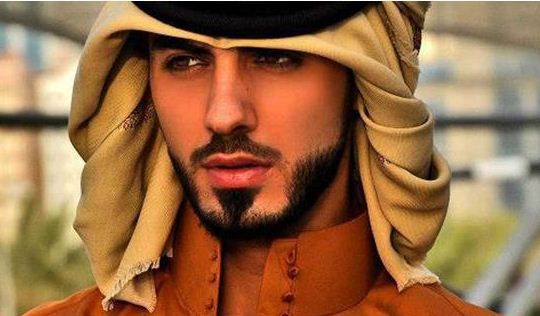 Riyadh - Meet Omar Borkan Al Gala, the hunk from UAE deported from Saudi Arabia because officers of the country's morality police, fearing for the safety of their women, thought he was too handsome to be allowed to stay.
According to Jezebel, Omar Borkan Al Gala, a Dubai-based actor, photographer and poet, was one of three men from the UAE attending the Jenadriyah Heritage and Cultural Festival in Riyadh as delegates.
Digital Journal reported that he and his colleagues were kicked out Saudi Arabia because they were just too handsome to be allowed to stay and expose modest Saudi Arabian women to unaccustomed carnal temptations.
News that some UAE men were kicked out of the conservative Sunni kingdom out of fear of exposing women to spiritual dangers of carnal lust first appeared in the Arabic newspaper Elaph. According to Elaph: "A festival official said the three Emiratis were taken out on the grounds they are too handsome and that the Commission members feared female visitors could fall for them."
Both Elaph and Sky Dancing Blog reported that Al Gala was at the UAE's pavilion at the Riyad festival when an incident involving a well known UAE female singer, Aryam, led to the feared religious morality police, the Commission for the Promotion of Virtue and Prevention of Vice, storming the UAE pavilion and unceremoniously bundling him and his colleagues out of the festival and out of the kingdom entirely!
Sky Dancing Blog confirmed Aryam went to the UAE pavilion but the artiste explained she visited the pavilion as a delegate of the UAE. According to Sky Dancing Blog, Aryam said she was invited by the Abu Dhabi Culture and Tourism Authority.
Read more: http://www.digitaljournal.com/article/348796#ixzz2RgdkVhyd

 I WILL NEVER FORGET YOU IN ALL MY LIFE ( ISMAIL MUSSA )
Billions of human beings have walked on the surface of this earth. They all belonged to different nations and cultures. A few of them made history, for which they were remembered, whereas others were never to be mentioned again. Although each one was personally different from every other, their habits, thinking and tastes were different and they all had two things in common. First, they were all delivered from their mothers womb and secondly, they all tasted death.
What is death?
 Death is when the soul is separated from the body; it receives reward and punishment and the separation of the soul from the body means loss of power of the soul over the body. The soul uses the body in its works; it catches by the hand, hears by the ears, sees by the eyes and acquires the knowledge of all things.
Every soul shall taste death
Every soul will taste death.” From this verse we know that death is such a thing that you can’t escape from even if you are in a house, which is built with metal walls, and has a massive padlock.

 Death will not only come when hair and the beard turn white, but it can come at any time, even when you are a baby, or an old person or a teenager or of middle age. Even if you are a king, a Prime Minister or a leader of one of the tribes.
Death also came to the Prophet and to the companions of the Prophet , so if death can come to such great personalities, who are we to be so unmindful of it?
Thinking of death
 Know O’ brothers that death is terrible because people are unmindful of death. The person who does remember death does not think of it with his whole heart. The mode of thinking of death is to free your mind from all thoughts and only put his mind on death. Be like the one who embarks on dangerous sea voyage.
 When the thought of death fills his mind and becomes one shadow, his worldly happiness decreases and his heart breaks. The best method of thinking of death is to remember the death of friends, family and neighbours, their bodies buried under the ground and their conditions in the graves.
 How their beautiful faces have become food for worms and insects! How their wives have become widows and their children orphans! How stricken by extreme poverty, they are passing their days miserably one by one! Think how death overtook them suddenly without any notice and warning! How unprepared they were for death and the hereafter!
 So O’ brothers! Remember death as often as you can in the 24 hours of your daily life and make this your habit. It could be your turn next then your friends, family and neighbours will place you under the ground.
 Start now before if it is too late!

